Visualizzazione post con etichetta mother nature has had enough. Mostra tutti i post

giovedì 12 maggio 2011

Save Anzio's shore and Italy too - 2

Dear friends, I don’t know whether you’re interested in this, as it’s a local problem, but, since we told you we’d update you on the issue of the public works for the protection against coastal erosion in Anzio, here we go.
There isn’t much to say, actually, except that the works are going on and on. They were supposed to stop at the end of April, but were granted an extension until May 31. Great!! This means another whole month of trucks, scrapers and stones!!! Yup, because right now if you go to the beach in Anzio, that’s all you see: there’s a sort of “highway” right in the middle of the sea, and trucks loaded with stones run up and down the hwy and unload huge rocks. Just imagine the noise they make.


On the weekend you can see lots of people walking on this “wonder of nature”, and I really wonder what they think about it… I mean, at the beginning I thought people would be horrified to see this new “road” about 2 meters above sea level, but now that more than three months have gone by I’m starting to wonder. And why is that? As I said, after months of hard work, in which we tried to inform people and raise awareness of the issue, we tried to attract the interest of the media and environmental associations, we wrote several articles on local newspapers and loads of articles on the internet, we’re starting to have doubts. Not about the fact that this plan is totally insane, nor about its huge environmental impact, but just about one thing: what do people, normal people, who are not surfers, think about it? Do they like it? Are they outraged or horrified by it? Or is it that they just don’t care at all about what’s going on?


And how about the public administration? Don’t they care about the repercussions that these works will have on the environment, water quality, safety and tourism? As we already told you in our previous article, we tried talking to the public administration and the Mayor of Anzio to convince them that something must be done. But they did nothing. Moreover, what is now clear is that they consider us just surfers, and, as such, a great pain in the ass… But we’re more than that: we’re citizens who are tired of watching the public administration destroy the environment.

 
Here’s some interesting news for all the surfers in Lazio: on March 11 the Italian news agency ANSA issued a press release stating that the Lazio Region has allocated 25 million euros for coastal defense and protection interventions. (They’re going to carry out the same insane plan all over the Region!!!!) “The towns where coastal protection interventions will be carried out”, said Mattei - a representative from the Council for the Environment and Sustainable Development of the Lazio Region – “are Ostia, Anzio, Nettuno, Latina, Formia, Fondi, Minturno, Terracina, Pomezia (Torvajanica), Ladispoli. It must be pointed out that the plans, regarding 80% of the interventions, have been carried out and developed by employees of the Lazio Region, thus significantly cutting overall costs”.
Good for us! They even managed to save taxpayers’ money! If this is the solution that the employees of the Lazio Region have come up with, I’m glad to say our coast is in good hands. There’s nothing to worry about!!!!


In the meantime, the construction works go on (even right now, at this very moment, I can hear them from here – it’s 7:30 PM…) while a few weeks ago, something extremely interesting happened in the neighboring town of Nettuno. ARDIS, the same agency that is in charge of the works in Anzio, decided to take immediate action to remove the recently built underwater barrier and only leave the groynes!!! It is worth mentioning what Alessio Chiavetta, the Mayor of Nettuno, said: “… we are working and exerting pressure on the relevant governmental bodies to protect the coast of Nettuno, which is severely hit by coastal erosion. It is now evident that the underwater barrier method is totally insufficient and inadequate: we need to build groynes on the whole stretch of coast to protect it, which is a project I’ve been supporting for quite some time and that is favorably viewed by many private beach clubs”.
So while ARDIS is busy building a Chinese wall in Anzio, only a few kilometers away, in Nettuno, the same agency has just finished removing the underwater barrier, as it was considered an insufficient and inadequate method for the protection against coastal erosion!!!! It’s such a paradox, isn’t it????


Italy is not famous around the world for the great attention paid to environmental protection. However, there are some exceptions: in Sabaudia, the Town Committee, together with the Park Protection Agency, the Province of Latina and the Land Improvement Consortium, stated that they will request ARDIS to review the coastal protection plan, so as to remove the barrier and adopt more eco-friendly methods. Nello Ialongo, a member of the Board of Directors of the Park Protection Agency, firmly opposes the plan and declares that underwater barriers have always devastated the neighboring stretches of coast.
Clearly, Chiavetta and Ialongo must be surfers, to come down so hard on the poor barriers!!!!

giovedì 14 aprile 2011

Save Anzio's shore, and the rest of Italy too....

Dear English-speaking friends, first of all, I’m sorry we’ve neglected you… those of you who’ve been following us since November are probably wondering what happened to us since I haven’t translated any of our articles during the past months. You probably thought: “are they dead or what?” Nope, we’re not dead, but the stretch of coast right is front of Anzio, where we live, is. They’re killing it. Every day, since February, one piece at a time. But let’s go back to the very beginning. 


In February, in Anzio, which is a town on the coast of Lazio, near Rome, public works for the protection against coastal erosion started.  The coast of Anzio certainly needed some kind of intervention in this sense, so what’s the problem? The problem’s the solution they’ve found to the coastal erosion issue. Basically, they’re building a sort of Chinese wall!!! 

Click on the photo to enlarge....
When we realized that the works were starting, we decided to see what they were doing and managed to find the relevant coastal erosion plan. And what we found out was shocking!!  The plan envisages building 15 100-meter-long stone groynes (and this wouldn’t actually be that bad) which are all connected together by a 4.5 kilometer long, 10 meter wide underwater stone barrier (and this is bad!!!) . This barrier is going to be only 50 cm. below mean sea level,  which means that a person standing on it would be in shin-high water.  Since this barrier is going to be 10 meters wide and made up of huge stones and rocks, which will probably be full of seaweed and very slippery in no time, it will be impossible to cross.  The other point that I’d like to stress is that this barrier is going to be 4.5 km. long!!!!!! The whole stretch of coast of Anzio.  There will be a 200 meter distance between the 15  groynes and the plan envisages building 100 meter x 200 meter cells, as they call ‘em.  Surfing’s going  to be impossible.  


But that’s not the only drawback: even swimming will be a problem and this plan also poses great risks not only to swimmers, kids etc. but also in terms of safety. Lifeguards will find it very hard to rescue someone from drowning.  The barrier will entail poor water quality (and marine pollution), thus greatly impacting tourism. And, despite what many may think, it won’t help replenish our narrow beaches. But the fact is that all these issues, all these problems (including safety, tourism, environmental impact, beach replenishment, etc.) are not taken into account. At all. The only variable the plan considers is coastal erosion. Nothing else.  The plan is by ARDIS, the Regional Territory Defense Agency, and the funds are of the Lazio Region.  The construction works are divided into three parts, each envisaging building 5 groynes in a 1.5 km long stretch of sea.  Works for building the first 5 groynes and the first 1.5 km long barrier started in February.  Since then, Green Ocean Surfing, together with other local surfing associations, have been fighting this, in every possible way. 


All our articles have been dedicated to this one and only  massive and urgent problem. WE’VE GOT TO STOP THEM!!!!!  We tried talking to the Mayor of Anzio and the local public administration to make them realize that building a “Chinese wall” in a town that lives on tourism and on the sea is insane. We tried to convince them that the underwater barrier will pose risks to swimmers, boats (stricken boats will have no possibility to be rescued or to reach shore), etc. and to ask the Regional administration to modify the plan so as to only build the 15 groynes. We asked an engineer and a marine biologist to study the problem and write a technical report. Together with other local associations, we managed to draw the interest of the media, and on Monday morning, April 11,  a TV show talked about the issue. But it’s not enough!!! We’ve got  to find a way to stop them. We’re not saying that nothing should be done to protect the coast from sea erosion, but there are other ways, other eco-friendly methods that do not have such a great environmental impact. But, of course, these are not even considered as feasible solutions. 


We just wanted to update you on the issue which, even though is a local problem, might interest you, since solutions like this are adopted across Italy and all around the world. We’ll keep you informed, but if you have any ideas as to what might be done to fight this insane plan or if you have any information that you want to share with us about other interventions of this kind that have been undertaken in your city or town, please write to us and let us know.  

 STOP IT!!!!

domenica 23 gennaio 2011

Plastic island


A plastic island in the Pacific Ocean: most of us would probably find it unbelievable.
But it's true. We collected some interesting information, that is available online, about this phenomenon. 
Take a look at it.

   ----------------------------------------------------------------------------------

The Great Pacific Garbage Patch, also described as the Pacific Trash Vortex, is a gyre of marine litter in the central North Pacific Ocean located roughly between California and Japan, north-west of Hawaii, where many currents come together to form a giant, clockwise moving area of water.


But how did it form? This huge Garbage Patch formed gradually as a result of marine pollution gathered by oceanic currents. It occupies a large and relatively stationary region of the North Pacific Ocean bound by the North Pacific Gyre. The gyre's rotational pattern draws in waste material from across the ocean. As material is captured in the currents, wind-driven surface currents gradually move floating debris toward the center, trapping it in the region.  However, this is not a unique phenomenon: a similar patch of floating plastic debris is found in the Atlantic Ocean, i.e. the North Atlantic Garbage Patch, a newly discovered area of marine debris found floating within the North Atlantic Gyre.

The Great Pacific Garbage Patch was discovered in 1997 by oceanographer Charles Moore when he was sailing off Hawaii. “I was confronted, as far as the eye could see, with the sight of plastic,” Moore said. “In the week it took to cross, no matter what time of day I looked, plastic debris was floating everywhere: bottles, bottle caps, wrappers, fragments. Half of it was just little chips that we couldn't identify. It wasn't a revelation so much as a gradual sinking feeling that something was terribly wrong here.”  Floating beneath the surface of the water, to a depth of 10 meters, was a multitude of small plastic flecks and particles, in many colors, swirling like snowflakes or fish food. An awful thought occurred to Moore and he started measuring the weight of plastic in the water compared to that of plankton. “Plastic won, and it wasn't even close. We found six times more plastic than plankton, and this was just colossal,” he says. “No one had any idea this was happening, or what it might mean for marine ecosystems, or even where all this stuff was coming from.”


Marcus Eriksen, a research director of the US-based Algalita Marine Research Foundation, founded by Mr. Moore, said: “The original idea that people had was that it was an island of plastic garbage that you could almost walk on. It is not quite like that. It is almost like a plastic soup.”

The size of this rubbish-covered region of ocean is still unknown: some say twice the size of Texas, others twice the size of continental United States... however, knowing how large it is doesn't really matter, what matters is that it's one of the largest man-made environmental disasters in the world and it's getting larger every year!  


Greenpeace said that 10% of all plastic manufactured each year ends up in the ocean! Worldwide, according to the United Nations Environment Program, over a million sea-birds and one hundred thousand marine mammals and sea turtles are killed each year by ingestion of plastics or entanglement. Fish and seabirds mistake plastic for food and choke to death.  

Various initiatives have been undertaken to study the phenomenon and educate the public on its implications. To draw attention to the phenomenon, the heir to one of the world's greatest fortunes, David de Rothschild, has undertaken an extraordinary venture: he set sail across the Pacific in a 20-meter catamaran, the Plastiki, made from plastic bottles and recycled waste.  The voyage aims to highlight a variety of environmental threats, including overfishing and climate change, but the most important part of Plastiki's route is its voyage round the Great Pacific Garbage Patch. 

David de Rothschild's "Plastiki".

Captain Charles Moore, who founded the Algalita foundation, commands a research vessel, ORV Alguita, that has carried its research team to the most remote regions of the Pacific Ocean to study plastic pollution. Since he discovered the Great Pacific Garbage Patch, he has been passionate about investigating it and creating awareness about its significance, the magnitude of marine pollution and its impact on life.

Plastic does not biodegrade; but it does photodegrade. Prolonged exposure to sunlight causes polymer chains to break down into smaller and smaller pieces. So, except for the small percentage that is incinerated, every single molecule of plastic that has ever been manufactured is still somewhere in the environment, and some 100 million tons of it are floating in the oceans. A dead albatross was found recently with a piece of plastic from the 1940s in its stomach. Even if plastic production halted tomorrow, the planet would be dealing with its environmental consequences for thousands of years, and on the bottom of the oceans, where an estimated 70% of marine plastic debris ends up.

“Plastics, like diamonds, are forever” – Charles Moore


>>>>WATCH THIS!!!!<<<<


mercoledì 5 gennaio 2011

SHARK el Sheik or a huge pool without sharks?


Since the July 2005 terrorist attacks, the quiet tourist destination of Sharm el Sheikh, on the Red Sea, had not attracted so much interest from the media worldwide. During the past few weeks, the media have started talking more and more about Sharm. Once again, it’s due to unpleasant facts: a series of unprecedented incidents, actually. No bombs this time, but a shark that bit several swimmers.
Journalists and TV news, not seeming to care much about providing accurate information to their public, and seeming more interested in the sensationalism of a shark biting humans, even said that a great white shark is terrorizing Sharm. Too bad that great whites, i.e. Carcharodon carcharias, live for the most part in cold waters and, so far, have never been spotted in the Red Sea.

But let’s have a look at what happened in chronological order.
October 20: Sharm Club village. First encounter with an adult oceanic white tip shark, i.e. Carcharodon longimanus, which was seen and photographed near shore.

First encounter _ Photo by OnlyOne ApneaCenter
An eye witness said that a woman who was swimming near the floating jetty had started screaming. From shore, it looked like the swimmer’s fins were set wide apart emerging above the water. But in reality the swimmer was not wearing any fins or mask. The fins that the lady onshore had seen were the dorsal and caudal fin of an oceanic white tip shark. Fortunately, the victim was only slightly injured and just needed a few stitches; however, she certainly got a nice scare; the circular injury inflicted by the shark was probably due to chafing by its rough skin, rather than to a shark bite. We must say, however, that it wasn’t the first time that an oceanic white tip shark had been seen roaming curiously in the area close to the dive platform used by free divers for training, but it had never come so close to swimmers before.
Not to create panic, the accident wasn’t disclosed, even though in Sharm rumors spread fast and word got around anyway.

November 30, more than a month later: 3 swimmers were bitten by a shark on the same day. The authorities blamed a single adult oceanic white tip shark about 8 ft. long, which had been photographed by a scuba diver at the Coral Bay resort.  

White tip shark responsible for the Coral Bay attack; it has a semi-circular scar (apparently due to a bite) on its caudal fin_Photo by Fabio Casarotti
All the incidents took place in an area along the coast from the Coral Bay Resort, where a Russian woman was bit, to the tip of Ras Nasrani, an area of approximately 10 km.


In these incidents, 3 Russian tourists, 2 men and a woman, were seriously injured and rushed to hospital in Cairo.     
At this point, Egyptian authorities, in a panic, decided to take measures, since they were facing an unprecedented situation.
December 1: all beaches were closed and all water sports activities, including scuba diving and snorkeling were suspended everywhere, except in the area of the Ras Mohamed marine park. During the night, the shark hunt began. Boats from the marine park chummed the water, i.e. threw huge amounts of blood and cut up fish meat in the water to attract sharks. Official sources reported that 2 sharks were killed, a mako shark and an oceanic white tip, which were immediately blamed for the incidents.


However, a couple of days after the autopsy, the authorities revealed that the two sharks were innocent. They were killed for no reason.
December 4: beaches were reopened, after a series of check dives were conducted to make sure the area was safe. 
December 5: an elderly German woman was bitten by an oceanic white tip shark while she was swimming off the Hyatt Hotel. She suffered serious injuries and died. Eye witnesses reported that, before the incident, some tourists had thrown food in the water, attracting a multitude of coral reef fish to take some pictures. Feeding fish is prohibited everywhere in the Red Sea, but unfortunately people often don’t abide by this rule. Some hotels even give their guests “fish bags”, i.e. bags of leftover food to feed the fish. Before feeding fish, though, it would be wise to think that small fish attract big fish. It’s a law of nature.   
Glass bottom boats usually throw food in the water to attract a multitude of colorful fish for the tourists to marvel at. Nobody does anything to stop them, however, so as not to spoil their questionable business.

On the same day, December 5, all beaches are once again closed. Diving, snorkeling activities and water sports are banned. Several internationally acclaimed shark experts are invited to Sharm to investigate the causes of the atypical behavior of the shark or sharks involved in the incidents.
8-28 December: diving, snorkeling activities, and water sports are allowed provided that a series of safety rules are complied with, following the advice of the team of shark experts.
There is talk of installing shark nets to protect hotel beaches, but this is only possible on shallow and sandy bottoms, without current. The maximum depth of the Red Sea is 2600 meters, the currents are often very strong, and close to shore there are reefs that from the surface plunge straight down hundreds of meters. Then there is talk of erecting watch towers on all the hotel beaches, and lastly of creating a system of buoys emitting electromagnetic signals capable of keeping sharks and rays away from the coast where the hotels are located. If this were the case, the entire coast of Sharm would become a huge swimming pool without sharks or rays. Wouldn’t it be easier to educate tourists entering the water to respect the marine environment and its rules?

Ten years ago, Sharm was mainly a place for divers, who for the most part, are used to respecting the marine environment where they dive.
Today, Sharm is a place for mass tourism. It’s a cheap destination, and ever-growing numbers of people come here for a week’s holiday without having a clue about the fragile marine ecosystem of the Red Sea, nor about the damage that their ignorance causes.  To please the tourist market, is it then more desirable to turn the Red Sea into a gigantic open-air aquarium? So it seems.
Non-official sources report that the shark hunt did not end with the killing of the 2 sharks at the beginning of December, but that at present at least 8 sharks of different species have been killed, including a nurse shark, which is not considered even potentially dangerous to humans. Why?
The HEPCA, Hurghada Environmental Protection and Conservation Association, condemns without reserve the indiscriminate killing of sharks in Sharm el Sheikh. Since 2006, Egyptian law prohibits the capture, killing, and sale of sharks. Fishing is also prohibited, except for set periods of time and outside national parks. Unfortunately, it’s becoming more and more common to see small fishing boats stealing away from dive sites at the break of dawn, after a night of illegal fishing. Year after year, diving in Sharm, it’s easy to see the consequences of over-fishing: there is less and less fish in the water. 
A senior official of the South Sinai Protectorate, who is also a marine biologist, defended the SSP from the accusations of HEPCA describing the indiscriminate killing of sharks as a scientifically recognized shark assessment. This “assessment” involves the examination of shark innards, and therefore the killing of all captured specimens. The brilliant biologist, after examining shark innards for little over a week, came to a ridiculous conclusion: in the Red Sea, there would be a “surplus” of sharks. At the global level, many species of shark are endangered, and some even risk extinction. Those who have dived in Sharm know that it is not common or easy to encounter these wonderful creatures underwater, so the question that comes to mind is: how can anyone state that there is a “surplus” of sharks in Sharm?

What were the causes of this atypical behavior of sharks? Let’s start with saying that no shark willingly attacks a human being. Sharks do not eat people. Our meat doesn’t taste good to a shark. If a shark bites, it’s a way of understanding what we are. In fact, if a shark happens to bite a person, it bites and then releases. Sharks don’t eat people, because we’re not its usual preys. All incidents are caused by erroneous human behaviors, often unintentional. When we enter the water, we cross the threshold of a world that is not our own; the possibility of encountering a shark is remote, but it exists. It is our responsibility to understand how to interact with these creatures, that have been the ocean’s top predators for millions of years. We can’t simply chase them away from their natural habitat.

The major cause of the incidents that happened in Sharm is now well known, and it is, as usual, an example of erroneous human behavior. At the end of November, after the Eid, the Muslim sacrifice feast, the crew of a cargo ship threw overboard over a thousand carcasses of sheep, thinking that they would sink. Instead, the carcasses became bloated with water and started floating on the surface of the sea, carried by currents.
Sheep carcass… apparently, a cargo ship threw overboard hundreds of carcasses after the Eid, the Muslim sacrifice feast… it seems like this attracted the sharks…

Sharks are the garbage collectors of the sea, and were attracted by the decaying carcasses. Currents then brought the carcasses and the sharks close to the coast. An excessive abundance of food in the water can also bring about a behavior that in ecology is called “feeding frenzy”, which, as the name suggests, causes predators, such as sharks, to go wild and bite anything within biting range, including other sharks or a person that happens to come between the shark and its food. This is a perfectly understandable behavior. Why, then, the sea and its creatures have to pay for a human mistake?

Curious facts about sharks:
-Among the over 500 species of sharks known to man, only 4 are considered potentially dangerous for man: the great white shark, the oceanic white tip, the tiger shark, and the Zambezi shark, or bull shark.
- A shark only eats 1 and a half kilos of fish 3 times a week.
- How dangerous are sharks? 100 million to 1, this is the ratio of shark/man deaths in 2007; this means that for every man killed by a shark, there are 100 million sharks killed by man.

To know more about these wonderful predators of the sea, to learn how to behave if you happen to interact with them, take a few minutes to watch this amazing video: it makes one think. Enjoy it!  


P.S. Good news: The Governor of South Sinai, on January 2, 2011, stated that he did not agree to install an electromagnetic shield to protect the beaches from sharks as there is no scientific proof that shows that this device actually works. A big thank you from the Red Sea sharks!

Article by: Barbara Ferri 


Barbara Ferri is a pisces, the daughter of a Navy officer and a globetrotter. She arrived in Sharm El Sheikh in 1999 where, bewitched by its underwater beauties, she still lives, dedicating her life to underwater filming. She graduated in creative writing and is a writer.  

www.greenoceansurfing.com


domenica 21 novembre 2010

Pollution: the current state of Italy’s coastal areas


Pollution: the current state of Italy’s coastal areas
Here’s a very interesting report by Legambiente, dated August 2010 but currently of interest, depicting the current state of Italy’s coastal areas. This article is useful for both our Italian and international readers, considering the number of tourists who come visit Italy (of which we are very pleased and proud!!), its art and towns as well as sea resorts.   
This report is quite disturbing… unfortunately Italy’s a beautiful country only in a postcard, while if you take a closer look at it it’s pretty dreadful… especially in terms of its huge environmental problems and protection. Over the past few days, the government has been dealing with a protest that sparked in Campania due to the waste disposal issue and some members of the Italian government just dismissed the issue, making arrogant statements. The point is NOT who made mistakes in the past or who’s making the decisions today. Perhaps we are just tired of paying the consequences of other people’s “crimes” and, like Mother Nature, we’ve had enough. Italians are lucky to live in such a wonderful place and it’s time to roll up our sleeves and do something! We owe respect to this country!    
  
      
2010 Goletta Verde’s outcome: 169 critical areas
169 critical areas threaten the “health” of the Italian sea, one every 44 km of coast. 132 river mouths are polluted. Campania, Calabria and Sicily earned the summer 2010 “black shirt” for the most polluted sea. 15% of Italians are NOT connected to sewerage, while 30% of them, i.e. 18 million citizens, dispose of untreated household fluid and solid waste directly in rivers, lakes and the sea.          
Sardinia and Puglia, instead, positively stand out and have been assigned positive points, the so-called “sails”, which are awarded to coastal towns by Legambiente and Touring Club, in accordance with the 2010 Blue Guide.  
This is the final outcome of ‘Goletta Verde’ – the historic Legambiente campaign that aims to monitor and provide information on the “health” conditions of Italy’s coastal areas, sea, rivers and lakes. 
A two-month, 2000-mile journey along Italy’s coast and 25 legs, to monitor the sea and denounce cases of beach access being denied, violations of building regulations in coastal areas, new yet useless tourist harbors and energy threats: oil – off-shore drilling, refineries located on the coast and oil tankers – as well as the risk posed by new nuclear or coal-fired power plants.   
The 25th Goletta Verde report put a spotlight on the key problems of the marine and coastal ecosystem; it analyzed river mouths and sea stretches that are polluted due to failure of or insufficient waste treatment and illegal waste disposal. And the outcome of this journey is not at all positive: there is a critical area every 44 km of coast and 87% of the contaminated samples collected by ‘Cigno Verde’ biologists are severely polluted, with quantities of bacteria of fecal origin that are double the allowed maximum limit imposed by law. These figures reveal a drop in water quality conditions compared to last year, when 81% of the samples analyzed were polluted.              
The results of the Goletta Verde analysis of river mouths reveal that Italian rivers are extremely polluted: an alarming situation, on the verge of a state of national emergency. Rivers are the main sources of marine pollution, which confirms that untreated sewage mainly comes from inland towns. Out of 169 critical areas, 132 are river mouths, 87% of which are severely polluted.        
As resulting from the analysis conducted by Goletta Verde’s mobile lab, water pollution by sewage is mainly due to the absence of or insufficient waste treatment.   
“The fact that the Italian sea is polluted due to the absence of sewage treatment plants for 18 million Italians is really embarrassing, since Italy’s the seventh most industrialized country in the world” said Stefano Ciafani, scientific director of  Legambiente. “We risk heavy sanctions due to Italy’s failure to meet EU water treatment requirements, and Europe won’t grant amnesty to our country, which has often used this mechanism, that only rewards slyness and deceit. 30 billion euros are needed to complete the sewerage and sewage treatment system: the government and local bodies must take action now in order to find the necessary funds to implement these public works as well as to avoid spending money unnecessarily to pay inexcusable EU sanctions at the taxpayer’s expense”.                 
Summer 2010 was also characterized by an amendment to the bathing water quality regulations, which risks making “the Italian sea clean by decree”. 
“Our analysis reveals that Italy’s sea and rivers are heavily polluted,” pointed out Barbara Meggetto, spokeswoman of Goletta Verde, “despite the entry into force of a new law on bathing waters this year, introducing less stringent requirements with respect to the previous regulations. Unlike what happened in 1982, when Italy decided to impose more stringent rules with respect to the European standards, building one of the best monitoring networks in Europe, this time our country took advantage of the situation and seized the opportunity offered by the EU law, imposing softer bathing rules. Italy therefore takes a step back with this new law, which now considers suitable for swimming certain sea stretches that only a few months ago weren’t”.         
Unfortunately, the threats to the Italian sea and coastal areas are not only posed by fecal bacteria, but also by property speculation and illegal buildings along the coast. As denounced by Legambiente’s 2010 ‘Mare Monstrum’ report, in 2009 unauthorized building along coastal state property increased by 7.6% vis-à-vis the previous year, with 3954 unlawful actions.      
Apart from houses, villas, residences and hotels with sea views, coastal areas are also “attacked” by harbor plans. Tourist harbors, in fact, are clearly one of the best subterfuges to urbanize the coast, bypassing and getting around town-planning regulations. And all this is in addition to the 130 thousand boat dock spaces currently available in Italy; moreover, an analysis conducted in 2008 by UCINA, the Italian nautical industry association member of Confindustria, reveals that, without adding a single cubic meter of concrete, but simply by reorganizing and restructuring existing harbors along Italy’s coast, an estimated 40 thousand new boat dock spaces could be obtained, of which 13,500 within six months.       
Among the new risks that pose a threat to the Italian sea and coast, moreover, Goletta Verde denounced the “Louisiana risk”, i.e. the oil-spill risk due to off-shore oil drilling and tanker transport.  
Currently, there are 9 oil drilling platforms in the Italian sea. Two of them are located in front of the Marche region (Civitanova Marche - MC), three in front of Abruzzo (Vasto - CH) and four in the Sicily channel in front of the stretch of sea between Gela and Ragusa.
Considering these 9 oil drilling platforms, the existing 12 oil refineries and 14 large oil harbors, over 343 million tons of petroleum products travel across our territorial sea every year. These figures place Italy among the countries that are at highest risk in terms of oil-spills and accidents.   
The ‘made in Italy’ oil rush has so far led to 95 grants for hydrocarbon research, of which 24 at sea, for an area of approximately 11 thousand square kilometers (sqkm). Moreover, 65 additional grants have been requested over the past two years, 41 of which at sea, for an area of 23 thousand sqkm. Specifically, the areas concerned are the Central and Southern Adriatic Sea, the Ionic Sea and the Sicily channel.  Sardinia’s sea and coastal areas are also at risk: 4 requests have been submitted for a total of 1838 sqkm in the Oristano and Cagliari Gulfs. Moreover, the enchanting sea stretch between the Elba and Montecristo islands is also at risk, for a total of 643 sqkm exactly in the middle of the Cetacean Sanctuary, in the Tuscan Archipelago National Park.       
An insane search for oil, in order to detect and extract the estimated 129 million tons that, according to the Italian Ministry of Economic Development, can still be found in the Italian sea and land. The game isn't worth the candle! In fact, as the country uses 80 million tons of oil on an annual basis, at current consumption levels, ‘made in Italy’ oil reserves would only last 20 months. Oil extraction in Italy would really put our future tourism development prospects and health at risk.      
The Goletta Verde report doesn’t only touch sore spots, though, it also reveals some positive things. It pointed out Italy’s areas of excellence and promoted biodiversity and Marine Protected Area (MPAs) conservation. In fact, 295 coastal areas stand out in terms of environmental protection and sustainable tourism promotion; these areas have been listed in the Blue Guide of Legambiente and the Italian Touring Club and classified according to the awarding of 1 to 5 “sails”, i.e. the maximum recognition. The summer 2010 areas of excellence are the following: Sardinia, Puglia and Tuscany. 14 towns have been awarded with five “sails”, i.e. Pollica (Sa), Cinque Terre (Sp), Ostuni (Br), Capalbio (Gr), Castiglione Della Pescaia (Gr), Nardò (Le), Capraia (Li), Salina (Me), San Vito lo Capo (Tp), Bosa (Or), Baunei (Og), Noto (Sr), Posada (Nu) and Otranto (Le); while other 42 towns with four “sails”.  
As usual, other Legambiente projects were promoted together with Goletta Verde, such as its sustainable energy campaigns, "Nucleare? Respingilo al mittente!", "Firma per le rinnovabili, no al nucleare" – and other initiatives, such as "Handiamo!", "2010, Anno Internazionale della Biodiversità", "Legambiente Turismo", "Stop ai sacchetti di plastica" as well as initiatives to promote the use of LPG for nautical purposes. 
The 25th Goletta Verde analysis was conducted thanks to tax donations (in Italy, 5x1000 of one’s income can be donated to an organization of one’s choice) and to the funds granted by the Ecogas Consortium, which promotes the use of LPG not only for cars and scooters, but also for boats, and Novamont, a leading bioplastics producer (ranging from shopping bags to cutlery and other).    
You can find more information about this issue on the website: www.golettaverde.it.
Source: http://www.legambienteonline.it

www.greenoceansurfing.com


lunedì 1 novembre 2010

Preyed predators


Man eaters…

I read an interesting article on sharks in the newspaper today (Corriere della Sera, October 12, 2010); it talks about an initiative, the European Shark Week, which aims to impose more stringent controls over fishing and strengthen the EU ban on “finning”, the wasteful practice of slicing off a shark's fins and discarding the carcass at sea.  Shark Alliance (http://www.sharkalliance.org/), a coalition of more than 100 conservation, scientific and recreational organizations, is marking the start of the fourth annual European Shark Week by calling on Members of the European Parliament to take action.  
The current EU finning regulation is one of the weakest in the world. The simplest, most effective way to implement a finning ban is to require that sharks are landed whole with their fins naturally attached.
«The growing interest in the European Shark Week provides a great opportunity to raise public awareness of the issue and testify to the widespread concern for the future of sharks”, said Serena Maso, national coordinator of Shark Alliance. “This year, EU citizens call on Members of the European Parliament to address the problem and take action to prevent finning, which, moreover, is a wasteful practice ».  

On the web you can support several organizations that deal with the issue; BITE-BACK (http://www.bite-back.com/) is one of them. Bite-Back is a UK shark and marine conservation organization with a mission to halt the trade and consumption of vulnerable fish species, promote sustainable fishing, protect ocean habitats and inspire worldwide respect for the marine environment. It aims to promote, together with restaurants, fishmongers and supermarkets, protection of sharks by reducing consumer demand for its meat and fins.  Since it was formed in 2002, Bite-Back has promoted several campaigns to empower the public to become more resolute in its commitment to conserving the oceans. Founder and campaign director, Graham Buckingham, says: "Bite-Back presents an exciting development in the way we can all contribute to protecting threatened fish species by choosing what we buy, from where and how we can support the marine environment by reducing domestic pollution."
The shark slaughter figures are astounding: currently 100 million sharks are slaughtered each year; by 2017, it is anticipated that 20 species of shark could be commercially extinct. The figures are even more alarming if we think that, since sharks are at the top of the marine food chain, they play a key role in the marine ecosystem. In a little over 50 years the slaughter of sharks has risen by 400% to approximately 800,000 metric tons per year.

Another organization that deals with shark protection and conservation is “Protect The Sharks Foundation”; it’s a Dutch non-governmental, non-profit organization that focuses on promoting education and information, producing and publishing educational material online and in magazines. Their website (http://www.protect-the-sharks.org) is very interesting  and provides a lot of information on the issue; the “GIMME A HUG” project is absolutely amazing. The initial idea is that sharks are fascinating and clearly unappreciated and there is still a lot we don’t know about them; Protect The Sharks Foundation embraced the cause and made a short documentary (13:30 minutes) in which these amazing animals show a totally different behavior than most people would expect. Only few people know about the tonic immobility phenomenon, or apparent death, which is a defense mechanism used by many animals.  Michael Rutzen, a well-known shark expert, also called Sharkman, has demonstrated and filmed the tonic immobility reflex of these frightening creatures several times. However, when you watch this video, just about any word can come to your mind, apart from the word “frightening”. Search “tonic immobility” and “sharkman” on YouTube: it will open up a whole new world to you. We are only providing one of his videos, but you can find many more on the web. There’s a new world behind every - even the smallest – thing; you just have to look for it. Awareness and knowledge free us and make us stronger.     


By: Green Ocean Surfing
www.greenoceansurfing.com


WATER MEMORY


Water memory
As human beings and surfers, water can’t leave us feeling indifferent. Water is the basis of life, it’s the essence of all life forms on Earth and other planets.   
Water as a molecule has its own specific geometric shape, a tetrahedron; it creates very different structures depending on a multitude of factors.   

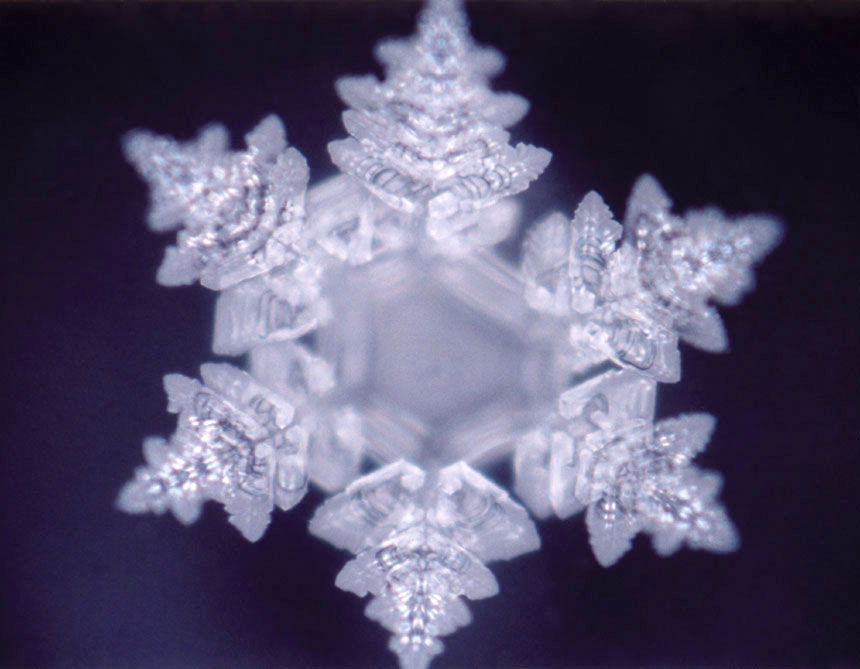
Just think of snow crystals, if you look at them under the microscope no two are exactly alike, they all have their specific geometric identity; even if you melt them separately and then freeze them again, you’ll get the same geometric shape as before. We can therefore deduce that each water molecule has its own identity.       

Several studies show that water holds memories of all the elements it experiences.  This is the concept on which, for instance, homeopathy is based: when water comes into contact with an element, even for a very limited amount of time (homeopathy often talks about infinitesimal amounts), it will hold geometric memories of this element’s structure and deliver its benefits to the person who drinks it.        

A Japanese expert, Dr. Masaru Emoto, over the past ten years has traveled around the world and held many conferences and seminars on water memory, at which he explains his method for studying and conducting experiments on water memory. He claims he can prove that by exposing water to external stimuli, such as words or pictures, and then freezing it (at a temperature of -5°C, i.e. ice crystals), it shows different geometric designs, depending on the type of information which it was exposed to. When exposed to positive words, such as “love” or “peace” or “Mother Teresa of Calcutta” water molecules show geometrically perfect shapes, such as crystals or flowers. When exposed to negative words, such as “evil” or “Adolph Hitler”, the same water molecules supposedly show a "definite distortion" and are "randomly formed".       
Clearly, it’s not the word in itself, but the state of mind of the person that says or writes it, that matters.  

I love you


A few years ago, a French biologist, Dr. Jacques Benveniste, Head of the Digital Biology Laboratory in Clamart (F), claimed - and his claims were supported by his findings - that “water retains memory”.  

Dr. Benveniste discovered the phenomenon in question in 1984, while working on hypersensitive (allergic) systems; by chance he brought to light the so-called “high dilution phenomena”, which involves diluting a substance in water to a degree where the final solution contains only water molecules. He observed that this highly diluted solution initiated a reaction, as if the initial molecules were still present in the water: water kept a trace of the molecules present at the beginning of the dilutions. International scientific reaction was obviously immediate and undoubtedly a match for the implications of this discovery: incredulity, even rumors of fraud.

Dr. Benveniste was - and is - totally right; the reason’s very simple and clear. You can even do it at home: put some water in a pot and boil it; then place the pot in the freezer together with another pot full of cold water; you’ll see that hot water FREEZES FASTER than cold water!     

Why is that? It’s easy: the structures bonding water molecules with hydrogen bonds undergo a series of changes when they change from one state of matter to another, of which they keep a trace due to a phenomenon called “hysteresis” *. In other words, water remembers (and memorizes) the energetic and entropic* path it undergoes during the heating and then freezing processes and retraces it back faster. It “remembers” the whole “path” and traces it back. Try it at home! It works!            
Note:
* hysteresis = a phenomenon that occurs in magnetic and ferromagnetic materials, as well as in the elastic, electric, and magnetic behavior of materials, in which a lag occurs between the application and the removal of a force or field and its subsequent effect.
* entropy = a measure of the disorder or randomness of molecules due to a change in temperature.

Dr. Masaru Emoto is the author of “Messages from water”; after Dr. Lee H. Lorenzen Jr., a biochemist nutritionist and water researcher, introduced him to the issue, he started working on water crystals and demonstrated some interesting findings. He exposed distilled water to external stimuli, such as music, written sentences or essential oils, then crystallized it in the freezer (at a temperature of -5° C.) and then took pictures of it under the microscope… the pictures are really incredible and clearly show how water molecules react to external stimuli.        
If you crystallize spring or tap water of different cities, you get different results: ranging from chaos to melodies.  

In some civilizations, during certain merry occasions, such as weddings or baptisms, a large bowl full of water is placed in the middle of the party. At the end of the party, all the guests drink some of that water to take the joyful occasion with them.     
You can find rituals like this all over the world. Notwithstanding what scientists say, according to popular wisdom, water can retain the memory of its surroundings and various cultures benefit from this belief.     

Just think that every living thing is made of water, including the human body; water is the basis of life, and this is true for all life forms. Just think of how our negative thoughts affect us and how pollution affects the oceans…     

Certainly nothing we just said can be considered scientific, but we can use it as a starting point to reflect on or dream about the issue. Nothing and nobody can prevent you from thinking with your head, and most of all, nothing and nobody can prevent you from dreaming. The idea that water retains memories is clearly disarming and disturbing at the same time, if you think of the evil on which water has been flowing for many centuries, but it’s also an interesting idea that carries a message of hope for the future.           
The pros and cons of knowledge.

Sources:


by: Green Ocean Surfing